Does living next to the park fit your daily routine?
A New Braunfels home beside a neighborhood park can fit well when the public space matches how you want to use it. Compare the actual entrance, available amenities and hours with your routine before treating the location as a benefit. The useful question is whether this particular home gives you convenient access to the activities you enjoy.
Start with the route from the home’s front door to a public entrance. A park boundary behind the fence may be close on a map while the usable entrance requires a longer walk around the block. Walk the public route during a showing when possible. Notice where you would cross streets, where sidewalks end and whether carrying equipment changes the trip. Ask the park operator to confirm public entrances instead of assuming a gate in a private fence provides authorized access.
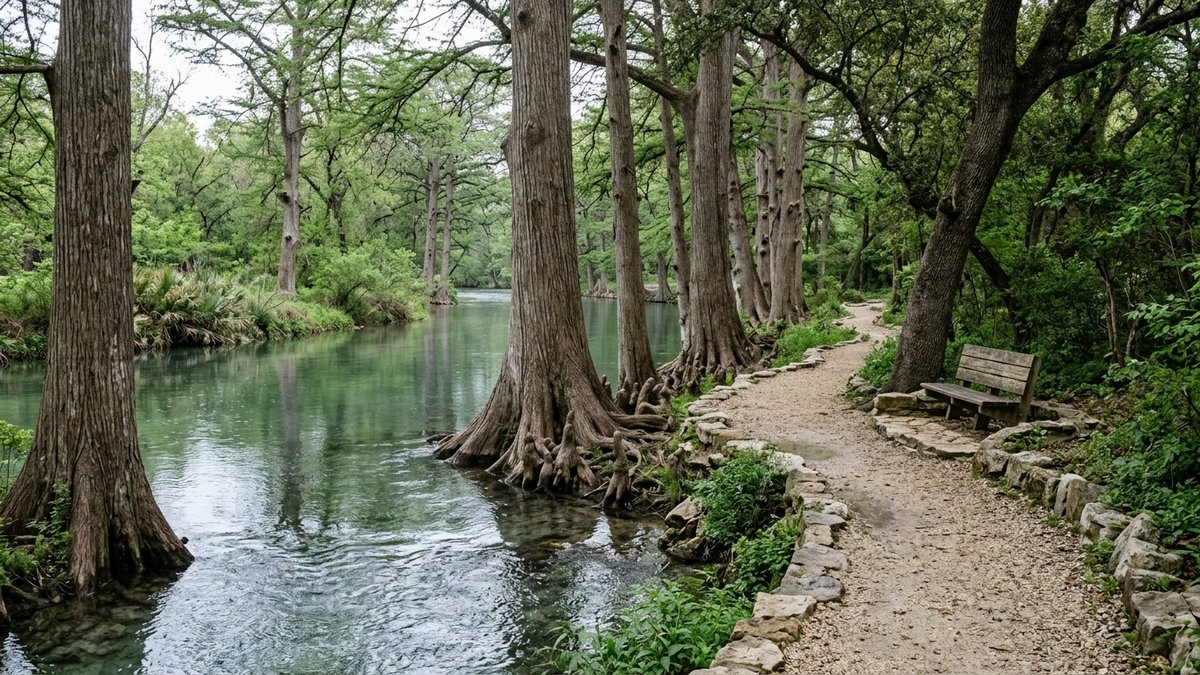
The City lists trails, fishing ponds, playgrounds and a Nature Education Center at Fischer Park. Those amenities serve different purposes. A buyer who wants a regular walk may care most about the trail entrance. Someone who plans occasional pond visits may judge the route differently. Use the official information for the exact park beside the home, rather than borrowing Fischer Park’s facilities for another location.
Keep the house itself in the comparison. Storage, parking, room layout and the yard still need to work. A convenient park does not solve a home that lacks the space you need. Pete’s buyer guidance can help you organize the property questions alongside the location questions before you narrow your choices.
What activity should you expect at the boundary?
Evaluate the park’s actual uses and your own tolerance for activity at the property line. A playground, trail entrance, parking area and open lawn create different viewing situations. None of them establishes how quiet a particular house will feel inside or on its patio.
Visit the home and accessible public areas at more than one useful time if your schedule allows. Listen from the rooms where you expect to work, relax or sleep. Look at what you can see from the yard and windows. Record the time and what was happening so a busy visit does not become a claim about every day, or a quiet visit a promise about every evening.
Operating hours help you plan those visits. Fischer Park’s published hours are 6 a.m. to 10 p.m. That is a useful local example of why a park visit during a midday showing gives only part of the picture. Check the specific park’s current hours and programmed activities with its operator. Ask about facilities near the house and whether an event uses a different entrance or parking area.
Seasonal amenities also need context. The City’s Fischer Park page lists a splashpad season that ends September 30, weather permitting. Do not assess an October showing as though the splashpad were operating on its summer schedule. Equally, do not assume a seasonal facility will have the same activity throughout the year. Keep the purchase decision tied to the home’s verified surroundings and your observed fit, without making claims about who uses the park or whether the area is suitable for a particular group.
How much privacy does the home give you?
Judge privacy from the home’s windows and outdoor spaces, with the current fence, vegetation and nearby public paths in view. A park behind the lot can create an appealing outlook, but the outlook and privacy are separate questions. You may enjoy the open view while wanting more screening around the place where you sit outside.
Walk through the rooms facing the park. Notice the height of windows, the location of the patio and how close a public path appears to be. Check sight lines while standing and sitting. Consider how curtains or existing landscaping affect your everyday use. These observations are more useful than describing the whole property as private based on a listing photo.
Keep observations separate from boundaries and permissions. If a fence, gate or landscaped area seems to extend into public land, ask the appropriate professional to verify the survey and property records. Ask the seller about maintenance responsibilities and available records. Do not assume that a mowed strip belongs to the lot or that an existing gate establishes a right to enter the park.
Write down the changes you would want, such as screening or a different outdoor seating arrangement. Verify applicable requirements before budgeting for a fence or planting project. The answer can depend on the property and proposed work. Ask the City or relevant association about its process instead of relying on what a neighboring home has done. For someone moving to New Braunfels, this property-level check keeps a pleasant first impression from carrying more weight than the actual daily living arrangement.
Could planned park changes affect your choice?
Check current project information before assuming the park will keep its present layout. Distinguish an existing amenity from a proposed addition, a design project and construction. A drawing shows a plan to investigate, not a completed facility or a guaranteed opening date.
The City’s Park Development page separates planning and design work from construction. It also links information about Northwest Park, Dry Comal Creek Trail and Mission Hill Park improvements. Use those links as a starting point for a location-specific question. Ask the department whether the project affects the parcel beside the home and where the most current documents can be found.
For example, the City’s October 2, 2025 announcement about Northwest Park invited public input on future plans. That announcement helps explain the planning history. It does not establish that a particular feature is finished today. Buyers comparing a home near a developing park should ask what is operating now and what remains proposed, rather than combining all announced features into a current amenity list.
Identify the changes that matter to your choice. A trail connection, parking area or new programmed space might change how you expect to use the location. Ask for the available current plan and explain the specific point you want confirmed. If timing or design remains unsettled, decide whether the home still works under the present conditions. Avoid paying for an assumed future benefit that you would need to justify the purchase. Do not base your purchase on an assumed resale premium, protected view or permanent condition of neighboring public land.
How can you compare two homes without overvaluing park access?
Compare the homes on the same set of daily-use questions, then separate confirmed facts from unanswered ones. A simple written comparison can show whether park access adds something you will use or distracts you from a property limitation that matters more.
For each home, record the public route to the entrance, the amenities currently available, the hours you checked and your observations from the main rooms and yard. Add the location of nearby paths, parking or programmed spaces. Keep the notes concrete. A measured walking route and a dated observation tell you more than a broad description such as great location.
Next, list the documents or answers still needed. These may include clarification of a fence boundary, confirmation of a public entrance or current information about a park project. Give each question to the appropriate person. The park operator can explain facilities and operations. A survey professional can address boundary questions. The City or association can explain its requirements for a proposed change. Pete can help you organize those questions around the homes you are considering.
Keep your own priorities visible. If you expect to use the park occasionally, the house’s layout or upkeep needs may deserve more weight. If daily access is central to your routine, the usable entrance and route become more important. Neither choice requires a claim that park-adjacent homes are worth more. Before taking the next step, compare your property tours with the two addresses, the park name and your unresolved questions. You can also give Pete the two addresses and these questions. That gives the conversation a specific property-fit decision to work through.