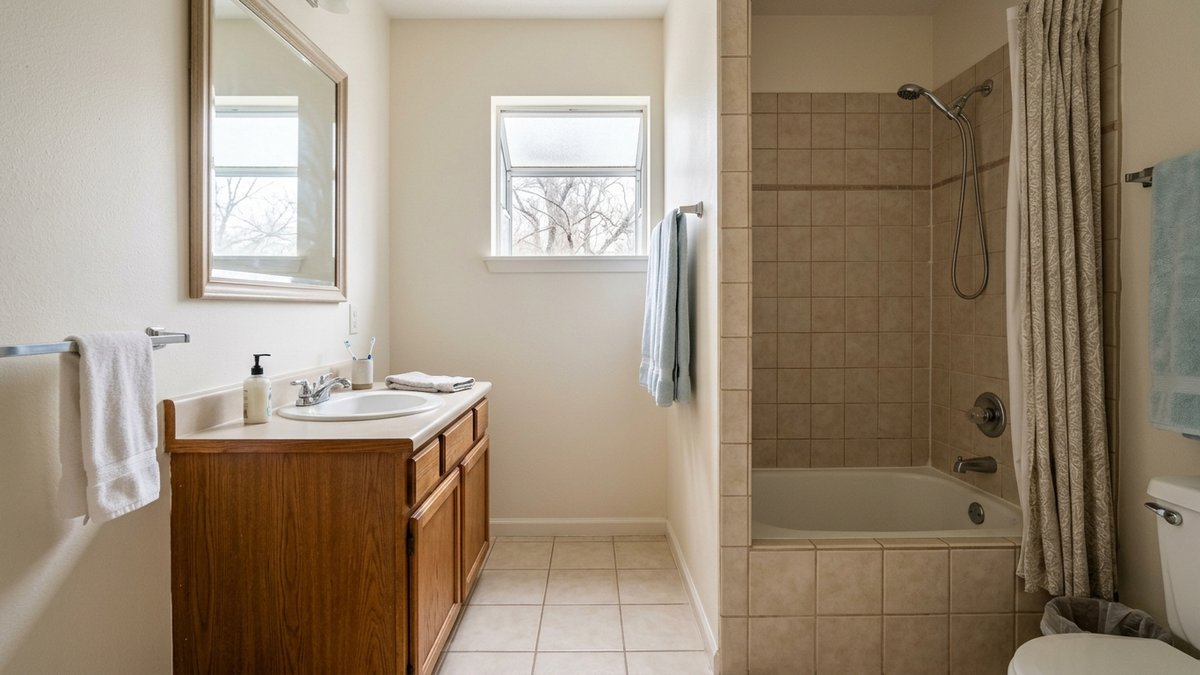
What exactly changed in the bathroom?
Start with the scope of work, not the finish. A new mirror, paint, or cabinet is a different question from a moved shower, altered plumbing, new electrical circuits, or a changed exhaust setup. Ask the seller or listing agent for a plain description of what was replaced, moved, added, and left in place. The answer tells you which records to request and which parts of the room deserve closer review.
Compare that description with what you can observe on a tour. A different fixture location or a newly enclosed shower may suggest a larger project than a simple surface update, but appearance alone does not establish what work occurred. Ask for invoices, a contractor’s scope, dated photos, and any permit numbers rather than treating a fresh finish as proof of either good or bad work. If the seller did the work, ask what tasks were performed and whether a licensed trade contractor handled any system changes.
A useful first question is, ‘What is new here, and what is original?’ Follow it with ‘When was the work completed?’ Those answers matter because the applicable requirements and available records depend on the work date, the actual address, and the work performed. A receipt for tile does not explain a drain relocation. A permit for one trade does not describe the entire room. Keep the questions specific so a home inspector or specialist can focus on the right issues later.
If you are comparing this bathroom with another home, separate visual appeal from the evidence supporting the remodel. You may prefer the newer finish, but the broader New Braunfels inspection checklist explains why visible condition and follow-up questions both belong in a buyer’s decision.
Which permitting authority and records apply to this address?
Find the property’s governing jurisdiction before searching for a bathroom permit. A New Braunfels mailing address does not by itself prove that the home sits inside New Braunfels city limits. The city-limits and county comparison is a useful starting point for the address question. Confirm the jurisdiction for the property, then ask that authority how to search work from the year of the remodel.
For property under City of New Braunfels jurisdiction, the city’s permit guidance distinguishes cosmetic work from alterations to building, electrical, mechanical, and plumbing systems. Replacing a fixture without altering the plumbing system may be treated differently from moving plumbing or changing a trade system. The city provides permit categories and a public status lookup. Use the actual scope and date of the work when asking the city whether a permit was required. Do not assume every refreshed bathroom needed one, or that an invoice proves a required permit reached final status.
The published Comal County permit guidance addresses work in unincorporated areas and points to other possible authorities or requirements. Its scope differs from the city’s. For an address outside city jurisdiction, confirm the applicable county and any separate authority with the appropriate office. The county page alone does not establish a blanket permit rule for every bathroom update, and it should not be applied to a city property.
If the seller supplies a permit number, compare its address, description, trade, issue date, and final or inspection status with the work the seller describes. A record for a water heater, for example, would not explain a shower relocation. An open record calls for a question to the issuing office and the seller, not an assumption that the bathroom failed. If you cannot find a record, ask the authority about its search coverage and the work’s permit requirements before drawing a conclusion.
What can a home inspection tell you about a finished bathroom?
A Texas home inspection can assess accessible, visible conditions under the Texas Real Estate Commission’s standards of practice. It cannot certify work hidden behind finished tile, inside walls, or beneath a shower pan. That limit matters in a recent bathroom remodel because a clean surface can conceal details the inspector cannot see without opening it. Treat an inspection report as evidence about what was observed, not a warranty on every concealed layer.
Ask your inspector to review the bathroom’s accessible plumbing fixtures, electrical items, ventilation, surfaces, and signs of moisture within the inspection’s scope. Point out the remodel date and any changes the seller described. You can ask how the inspector will report an inaccessible area or a condition that merits further evaluation. The Texas inspector standards explain why hidden and latent conditions are outside a standard visual inspection.
On your own visit, note questions without diagnosing a defect. Is there visible staining near the tub or shower? Does a fan appear to be present and operating? Do fixtures drain or run in a way that concerns you? Is there a soft surface, loose tile, or an odor that deserves attention? A single observation can have more than one cause. Give the observation to the inspector and let a qualified professional evaluate it.
If the report identifies a plumbing, electrical, ventilation, or moisture concern, ask whether a plumber, electrician, HVAC professional, or tile and waterproofing specialist should evaluate that specific issue. A specialist may be able to test or inspect more narrowly, but the scope and any limits of that visit should be clear. Do not ask a general inspector to certify concealed waterproofing from a finished photograph or assume a specialist can prove every hidden detail without access.
Which seller records help answer the hidden-work questions?
Request records that connect a person, date, and task to the room you are buying. A useful set may include the contractor’s written scope, invoices, permit and final-inspection records where applicable, product details, warranty paperwork, and before-and-after photos. Ask which documents cover plumbing, electrical work, exhaust ventilation, shower construction, and fixture installation. A stack of receipts is less useful if nobody can match each item to the actual bathroom.
Read the records for what they show and what they leave open. A manufacturer’s warranty may cover a product without saying how it was installed. A contractor invoice may describe labor without documenting an inspection. A dated progress photo can show part of a wall before it was closed, but it may not show the whole assembly or establish compliance. A permit record may cover only the named work. These are pieces of the project history, not interchangeable proof.
Try a simple comparison: list the seller’s stated changes, the documents tied to each change, and the visible features that match them. If a new exhaust fan appears in the room but is absent from the scope, ask who installed it and whether its route and outlet were checked. If a shower was rebuilt, ask what waterproofing system was used and whether the installer provided a written record. These are questions for the seller and relevant professionals, not a reason to declare the work defective.
When records are missing, ask whether they can be obtained from the contractor, permit office, or product maker. Some older work will have incomplete paperwork. The practical issue is what uncertainty remains and whether an inspection or specialist can reduce it enough for your decision. Be careful with broad assurances such as ‘everything was done correctly’ when the speaker cannot identify the scope, dates, or supporting records.
How should you use these findings before an offer?
Put the bathroom into your overall buying decision rather than trying to declare it a pass or fail from one clue. Before offering, ask for the remodel scope and available records, confirm the property’s jurisdiction, and note any visible questions for an inspector. If you have the chance to review documents before an offer, compare them with the room and identify the specific gaps you would want evaluated. A new finish with a clear scope and matching records gives you a different information picture from a new finish with no project history. Neither picture guarantees the condition of concealed work.
Think in three lanes. First, what is documented: dates, contractor tasks, applicable permits, and final statuses. Second, what is visible: fixtures, surfaces, ventilation, and moisture clues an inspector can assess. Third, what remains concealed or unexplained: waterproofing, inaccessible connections, or a mismatch between records and the present layout. The third lane is where a focused specialist question may be more useful than another general assurance. This framework keeps the inspection focused on evidence you can actually obtain.
If you proceed, schedule the visual inspection and any targeted follow-up within the inspection process and deadlines that apply to your transaction. Ask your REALTOR about the agreed process and a qualified attorney if you need an interpretation of contract rights. Do not assume a standard inspection can resolve a hidden construction question before a deadline. Use the buyer guide to place the inspection alongside the rest of your purchase review, and contact Peter if you want help organizing the questions before you compare homes.
A bathroom that looks recently updated can still be a reasonable choice. Make that choice with a clear account of the work, the right jurisdiction’s records, and a realistic view of what an inspector can see. If a material question remains unanswered, name that question and the professional who can evaluate it before you decide how much uncertainty you are willing to carry.